
Email: hujin@chinahujin.cn
 English
 русский
 عربى
عربى
Author: HUJIN
Date: Sep 11, 2026
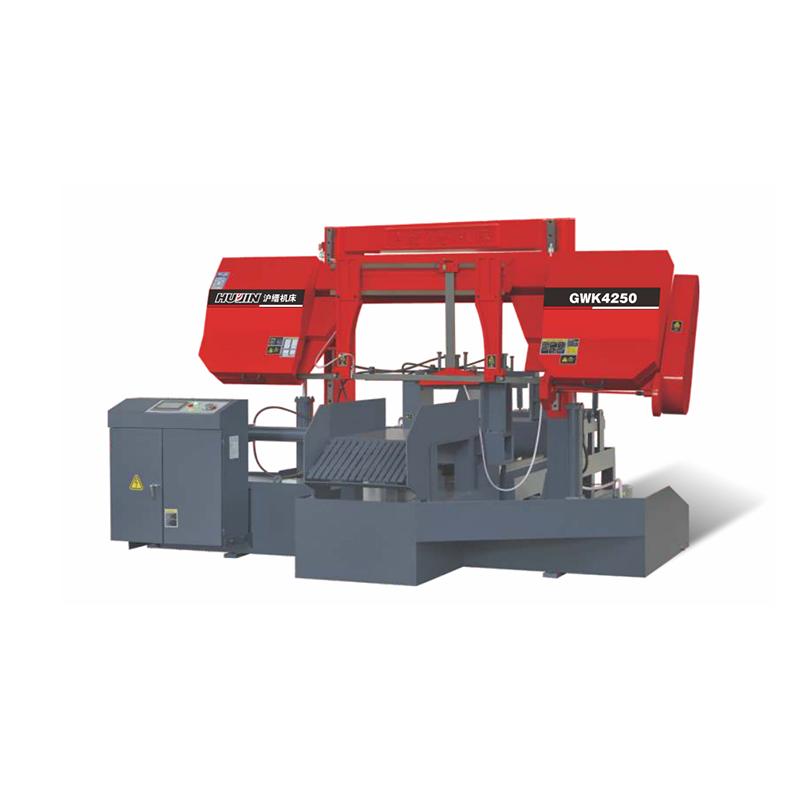
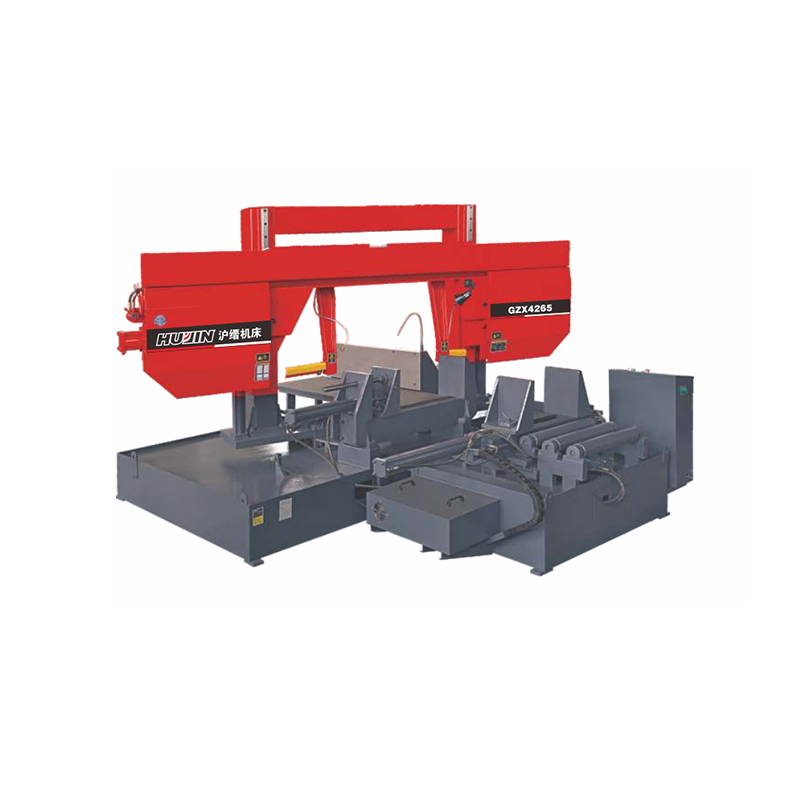
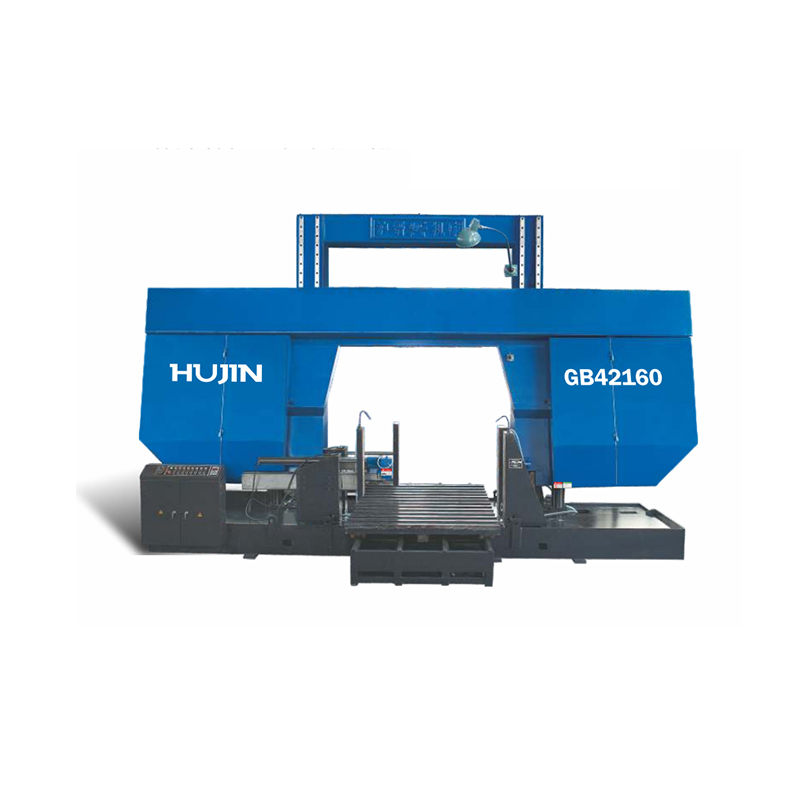
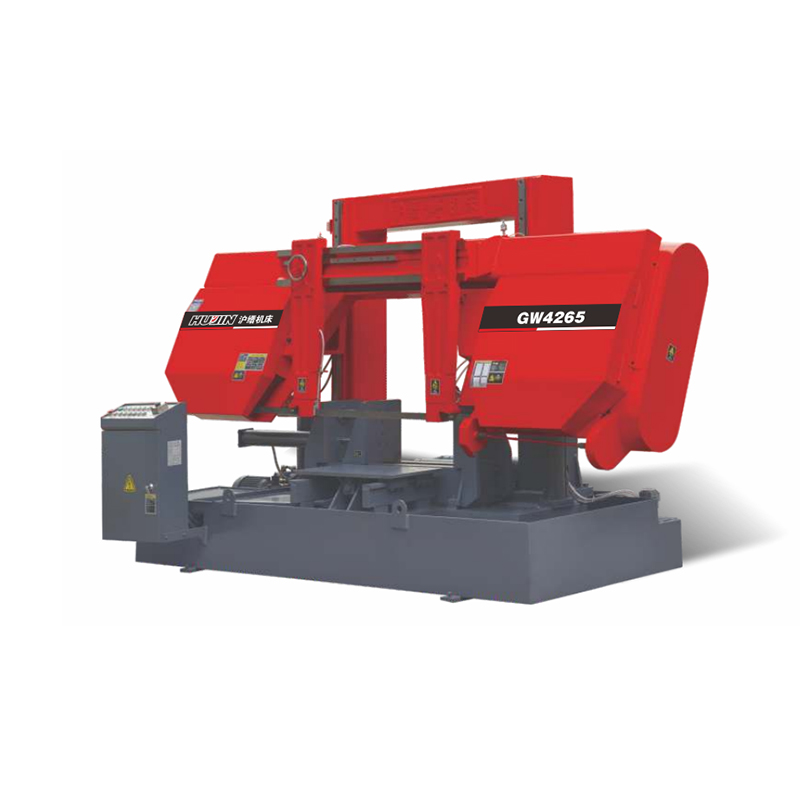
Double-Column Horizontal Band Sawing Machine: The Saw That Holds the Blade Straight Through the Thick Cut
A bandsaw blade wanders. It flexes under the feed pressure, and the cut curves. A double-column horizontal band sawing machine stops this by supporting the blade between two rigid columns. The saw head rides up and down on the columns, with the blade guides fixed close to the material on both sides. The result is a straight cut through the thick steel, the large billet, and the heavy structural section. For steel service centers, forge shops, and heavy fabrication, the double-column saw is the one that cuts square.

The Two Columns That Hold the Blade
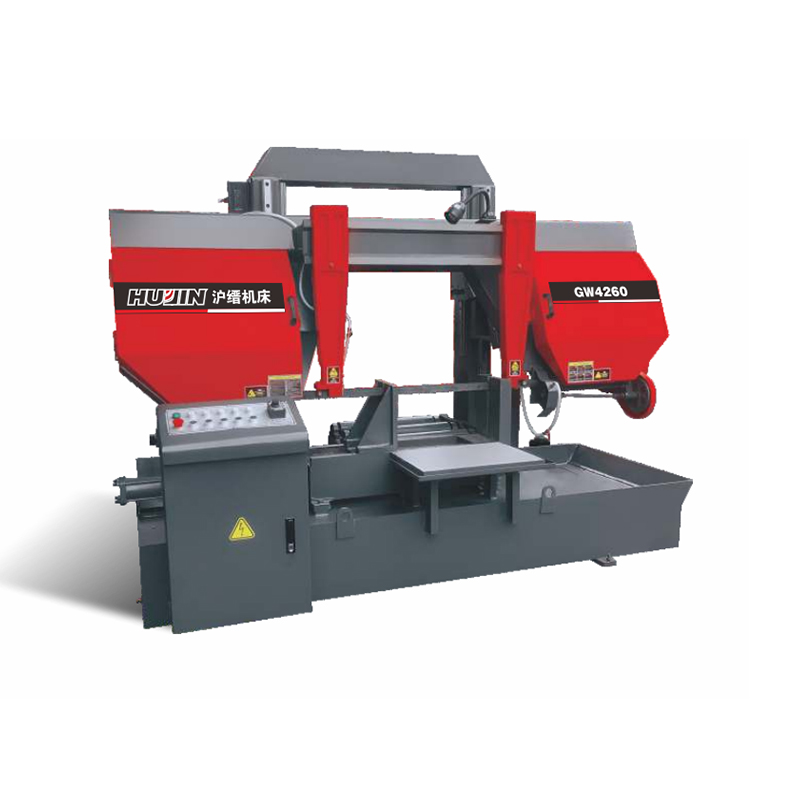
The columns are the frame. They are heavy steel or cast iron, bolted to the base, rising vertically. The saw head moves between them. A single-column saw has the blade guide hanging from one side. Under load, that side flexes. The blade wanders. A double-column horizontal band sawing machine with the two columns supporting the saw head on both sides keeps the blade aligned.
The blade guides sit close to the material, on both sides of the cut. The guides control the blade twist and keep the cutting edge perpendicular to the workpiece. A double-column horizontal band sawing machine with the properly placed guides holds the blade straight through the full depth of the cut.
The columns are aligned. The saw head rides on precision rails or the machined surfaces. A double-column horizontal band sawing machine with the properly aligned columns moves the saw head straight up and down, not tilted.
The Blade and the Cut
The blade is a continuous loop of toothed steel running on the drive wheel and the idler wheel. The blade width and the tooth pitch are matched to the material. A double-column horizontal band sawing machine with the right blade for the job cuts the thick steel without the blade wandering or the teeth stripping.
The blade tension is critical. A loose blade wanders. A tight blade snaps. A double-column horizontal band sawing machine with the hydraulic or the mechanical tensioner holds the tension through the cut.
The feed rate is controlled. Too fast and the blade overloads. Too slow and the work takes forever. A double-column horizontal band sawing machine with the adjustable feed sets the right rate for the material and the blade.
The Material and the Vise
The material sits on the saw table, clamped in the vise. The vise holds the material on both sides of the cut. A double-column horizontal band sawing machine with the properly positioned vise holds the material steady through the cut.
The material is steel, stainless, aluminum, or the structural sections. The saw cuts the solid bar, the pipe, the beam, and the bundle. A double-column horizontal band sawing machine with the right capacity for the material handles the range.
The coolant flushes the cut. The coolant keeps the blade cool and clears the chips. A double-column horizontal band sawing machine with the proper coolant system extends the blade life and keeps the cut clean.
Here is what a double-column horizontal band sawing machine needs to deliver:
- Two rigid columns supporting the saw head
- Blade guides close to the material on both sides
- Proper blade tension and feed control
- Vise clamping on both sides of the cut
- Capacity for the material size
- Coolant system for the blade and the cut
The Steel Service Center and the Forge
The steel service center uses the saw to cut the billets and the bars to the customer length. The cut has to be square. A double-column horizontal band sawing machine in the service center holds the tolerance.
The forge shop uses the saw to cut the slugs for the forging. The billet weight matters. A double-column horizontal band sawing machine with the square cut keeps the weight consistent.
The heavy fabrication shop uses the saw for the structural sections, the beams, the channels, the thick plate. The saw cuts the material that the lighter saws cannot hold straight. A double-column horizontal band sawing machine in the fabrication shop does the heavy cutting.
The Blade That Wanders
The blade wanders because the guides were too far from the material or the tension was too low. The cut curves. A double-column horizontal band sawing machine with the proper guides and tension cuts straight. The column alignment drifts because the machine was not set up properly. A properly aligned machine holds. The vise slips because the clamping was not enough. A proper vise holds.
A double-column horizontal band sawing machine is the saw for the thick cut. The columns hold the blade. The guides keep it straight. The cut comes out square. Choose a machine with the rigid columns, the proper guides, and the right capacity. The steel will be cut straight and the next operation will fit. That is the point. That is what the double-column saw is for.

CONTACT
Get in touch
Related Products
Zhejiang Hujin Machine Tool Co., Ltd. is a professional manufacturer specializing in the production of "Hurein" series hydraulic presses, band saws and milling machines.
Contact Information
phone: +86-18805885558
+86-13395785558
Email: hujin@chinahujin.cn
Add: No. 300, Xingda Road, Jinxiu Industrial Park, Huzhen Town, Jinyun County, Zhejiang Province, China 321404
Mobile Site
© 2023 Zhejiang Hujin Machine Tool Co., Ltd.
Automatic Band Saw Machine Manufacturer
