
Email: hujin@chinahujin.cn
 English
 русский
 عربى
عربى
Author: HUJIN
Date: Aug 07, 2026
Efficient Horizontal Band Sawing Machine: The Cut That Pays for Itself
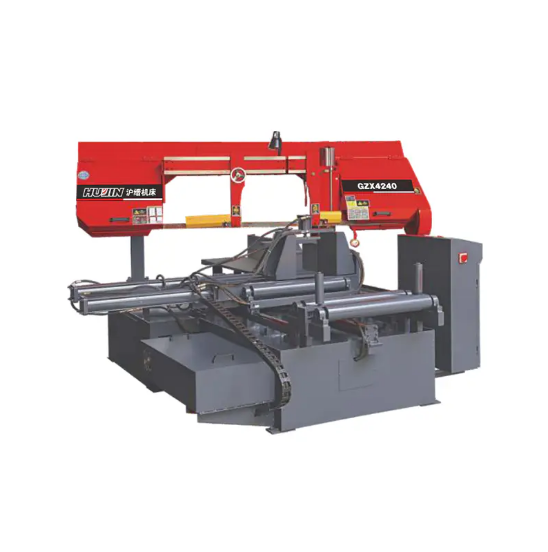
A saw that cuts slow costs money every shift. The operator waits. The next workpiece sits idle. The downstream machines run hungry. An efficient horizontal band sawing machine changes the math. It cuts faster without eating blades. It holds square through long production runs. It switches from bundle-cutting structural steel to slicing solid bar without an hour of setup. Shops that upgrade from an old manual saw to a properly tuned horizontal bandsaw notice the difference in the first week. Less scrap. Fewer blade changes. More material through the door.
Where the Time Actually Goes in a Cut
Blade speed and downfeed pressure do the obvious work. The less visible factors decide whether a saw runs all day or stops for adjustments every hour. Blade tension that drifts during a cut produces a curved face. Coolant that misses the cut zone overheats the blade teeth and kills them fast. Guide arms set too wide let the blade wander.
An efficient horizontal band sawing machine locks blade tension mechanically or hydraulically so it does not need constant checking. The coolant pump delivers flow directly into the kerf, not somewhere near it. Guide arms move with the vise or adjust quickly so the unsupported blade span stays short regardless of material width. These details do not show up in a catalog photo of a saw. They show up in how many straight cuts the shop gets between blade changes.
Material clamping matters just as much as blade control. A bundle of tube or angle iron shifts under cutting pressure if the vise does not grip every piece evenly. An efficient horizontal band sawing machine with a dual-vise system or a full-length clamping bed holds the bundle as one solid block. The blade teeth enter the material straight and exit straight. No pinched blades. No twisted stock.
Blade Life and the Real Cost Per Cut
A bandsaw blade is cheap compared to the downtime of changing one. The blade that lasts three hundred cuts costs less than the blade that lasts a hundred, even if it costs twice as much to buy. An efficient horizontal band sawing machine extends blade life by controlling the variables that eat teeth.
Variable frequency drives on the blade motor let the operator match blade speed to the material. Structural steel runs at one speed. Stainless runs slower. Aluminum runs fast. A saw with fixed speeds forces a compromise that either burns blades on hard material or wastes time on soft material. An efficient horizontal band sawing machine adjusts the speed with a dial or a program and gets it right for every job.
The downfeed control is where most blade damage happens. Too aggressive a feed on a tough alloy strips teeth. Too light a feed work-hardens stainless and dulls the blade without making progress. An efficient horizontal band sawing machine with a hydraulic or servo-controlled downfeed maintains constant feed pressure or feed rate regardless of how the material cross-section changes during the cut. An I-beam cutting through the web feeds differently than cutting through the flange. The saw adjusts. The blade survives.
Coolant filtration keeps chips out of the fluid and fluid out of the chip bin. Recirculated coolant full of metal fines acts like a grinding paste on the blade guides and the workpiece surface. An efficient horizontal band sawing machine with a proper filtration system keeps the coolant doing its job instead of working against the cut.
Here is what separates a saw that earns its floor space from one that just occupies it:
- Blade tension that locks and holds without operator adjustment
- Variable blade speed matched to material, not a compromise setting
- Controlled downfeed that adapts to changing cross-sections mid-cut
- Dual-vise or full-length clamping that stops bundle shift
- Coolant delivery aimed at the kerf with filtration that keeps it clean
The Shops Where Bandsaw Performance Determines the Day
Steel service centers cut bundles of tube, pipe, and structural sections all shift. The saw that takes twice as long on every cut backs up the whole yard. An efficient horizontal band sawing machine with automatic stock feed and programmable cut lengths lets one operator run batches while loading the next bundle. The saw runs. The operator does not babysit it.
Fabrication shops cutting solid bar for machining blanks need squareness that does not require a facing pass. A saw that cuts a quarter-degree out of square across a 150mm bar leaves extra stock on the blank and extra time in the CNC lathe. An efficient horizontal band sawing machine that holds square within a few thousandths per inch of cut saves more on the machining side than the saw ever cost.
Maintenance departments in heavy plants use horizontal bandsaws for repair work on shafting, plate, and structural sections. The saw sits idle for hours, then needs to cut accurately on demand. An efficient horizontal band sawing machine that holds its settings without drifting between jobs is ready when the breakdown call comes. The maintenance crew is not diagnosing the saw on top of fixing the production line.
What to Look at Before the Blade Touches Metal
A used car buyer kicks the tires. A bandsaw buyer checks the blade guides and the vise alignment. Cast iron guides wear predictably. Roller bearing guides need inspection for play and seal condition. An efficient horizontal band sawing machine with hardened guide surfaces and replaceable wear inserts stays tight longer than one that runs the blade directly against the saw head casting.
The bow lift mechanism gets ignored during demos because everyone watches the cut. A saw that lifts slowly or sticks on the return stroke kills cycle time between cuts. An efficient horizontal band sawing machine with a hydraulic lift that raises the bow fast and drops into the next cut position without drifting reduces the dead time that adds up over thousands of parts.
A horizontal bandsaw is not complicated. A motor spins a blade. A vise holds the material. The bow comes down. But the shop that buys on blade speed and price alone usually learns the difference in the first month of production. An efficient horizontal band sawing machine that controls tension, feed, speed, and clamping gets the same straight cut at four in the afternoon as it got at seven in the morning. That consistency is what the word efficient actually means.

CONTACT
Get in touch
Related Products
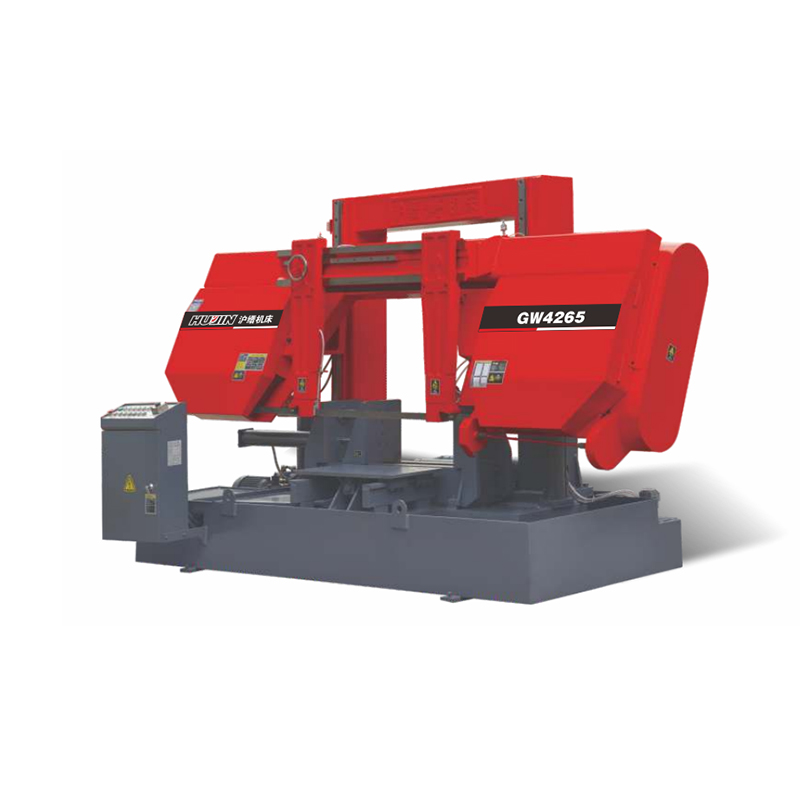
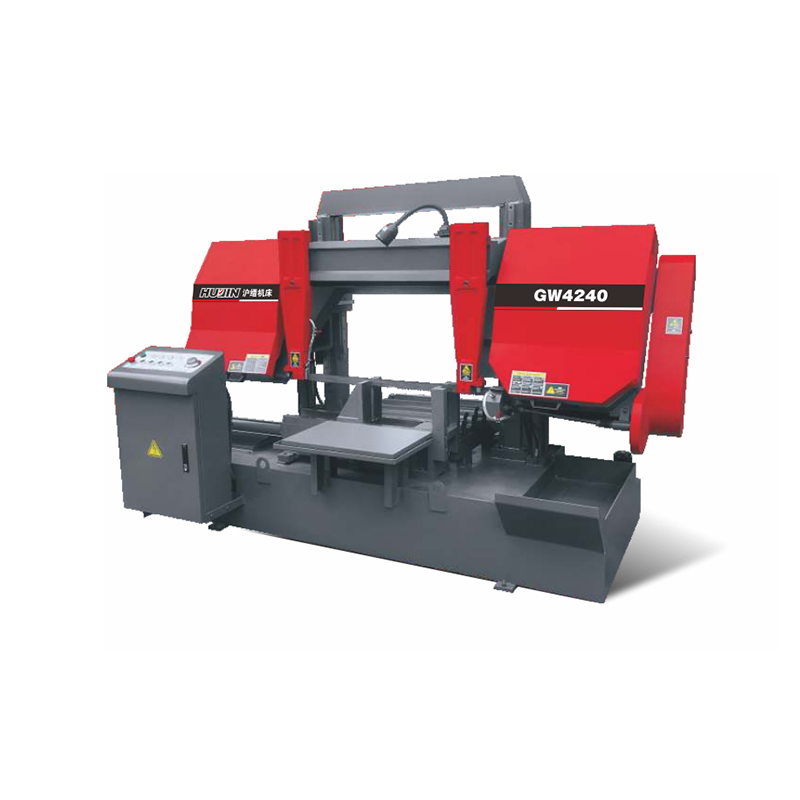
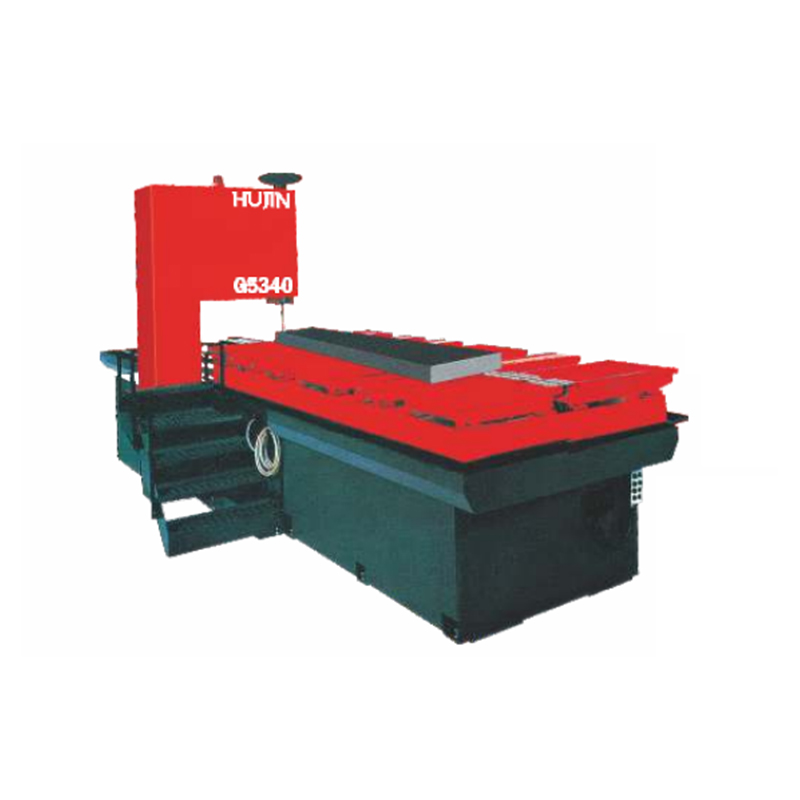
Zhejiang Hujin Machine Tool Co., Ltd. is a professional manufacturer specializing in the production of "Hurein" series hydraulic presses, band saws and milling machines.
Contact Information
phone: +86-18805885558
+86-13395785558
Email: hujin@chinahujin.cn
Add: No. 300, Xingda Road, Jinxiu Industrial Park, Huzhen Town, Jinyun County, Zhejiang Province, China 321404
Mobile Site
© 2023 Zhejiang Hujin Machine Tool Co., Ltd.
Automatic Band Saw Machine Manufacturer
