
Email: hujin@chinahujin.cn
 English
 русский
 عربى
عربى
Author: HUJIN
Date: Aug 28, 2026
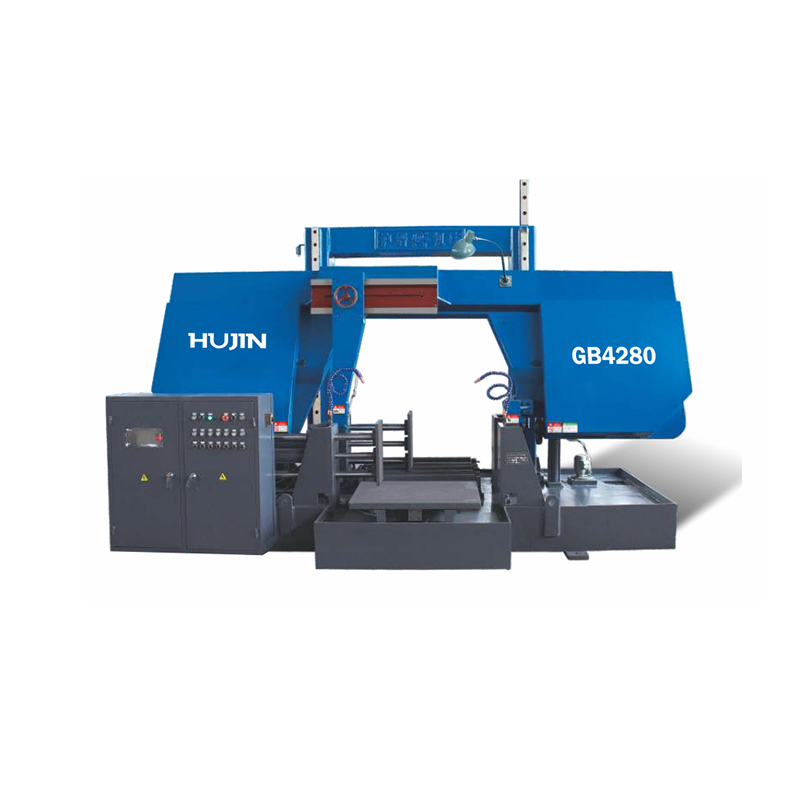
CNC Horizontal Metal Band Sawing Machine: The Programmable Blade That Cuts Steel to Length
A steel bar enters the shop. Before it becomes a shaft, bracket, or weldment, it has to be cut. Not measured with a tape and marked with chalk. Cut to a number on a screen. A CNC horizontal metal band sawing machine pulls the bar forward, clamps it, and brings the blade down. It repeats until the order is done. The operator loads material and walks away. For service centers, forge shops, and fabricators, this saw is the gatekeeper. Everything downstream waits on the cut.
The Blade Loop and the Cut
The blade is a continuous steel loop running on a drive wheel and an idler. Tooth pitch changes with the material. Aluminum runs fast and coarse. Stainless runs slow and fine. The CNC sets speed and feed from the program.
Carbide guides and backup rollers sit on both sides of the blade, positioned as close to the material as the vise allows. A CNC horizontal metal band sawing machine with properly set guides cuts square through the full bar depth. Hydraulic tension holds the blade at the set force. As the blade warms and stretches, the tensioner adjusts. A blade that wanders was loose.
Coolant floods the cut zone through nozzles aimed at the blade entry. Chips wash out of the teeth. A CNC horizontal metal band sawing machine with working coolant delivery prevents overheating and surface work-hardening.
The CNC That Runs the Job
The control stores job parameters: piece length, quantity, blade speed, feed rate. The operator calls up the program. A servo-driven feed advances the bar. The vise clamps. The blade descends. The offcut drops away. The cycle repeats until the order is complete.
The CNC monitors blade load through motor current. A hard spot in the steel triggers automatic feed reduction. The blade does not stall or strip teeth. A CNC horizontal metal band sawing machine with adaptive feed runs unattended through mixed material batches.
Here is what the saw needs to hold length and squareness:
- CNC with job memory and adaptive feed that backs off under load
- Servo-driven material feed with measuring wheel feedback
- Multiple vises clamping both sides of the cut
- Carbide guides close to the material, hydraulic blade tension
- Flood coolant hitting the blade entry point
Bar Stock, Billets, and Bundle Cutting
Steel service centers break down mill-length bars into customer orders. The CNC stores the cut list and tracks the remnant to less the stub end. Forge shops cut billets for the press. Precise length control keeps billet weight in tolerance. Fabrication shops cut beams, channels, and tube. Bundle vises clamp multiple bars. One cycle cuts a stack.
Why the Cut Curves
The blade guides sat too far from the material, letting the blade twist under feed pressure. Guides set close prevent this. Tension dropped because no one adjusted for blade stretch. Automatic tension control holds the setting. Feed rate was too aggressive. Adaptive feed slows the cut before the blade deflects. Chips packed into teeth because coolant flow was weak. Proper delivery keeps teeth clean.
A CNC horizontal metal band sawing machine is the first machine steel touches. Every turned part, milled component, welded assembly starts here. Choose a manufacturer that programs the length accurately, guides the blade squarely, and controls the feed for the material. The parts will measure correctly. That is the point.

CONTACT
Get in touch
Related Products
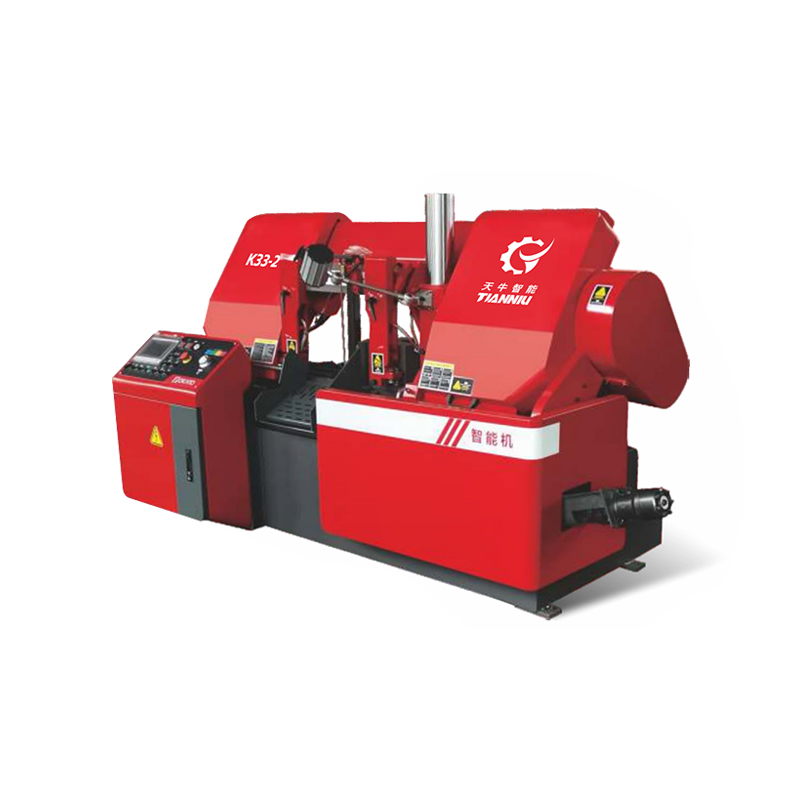
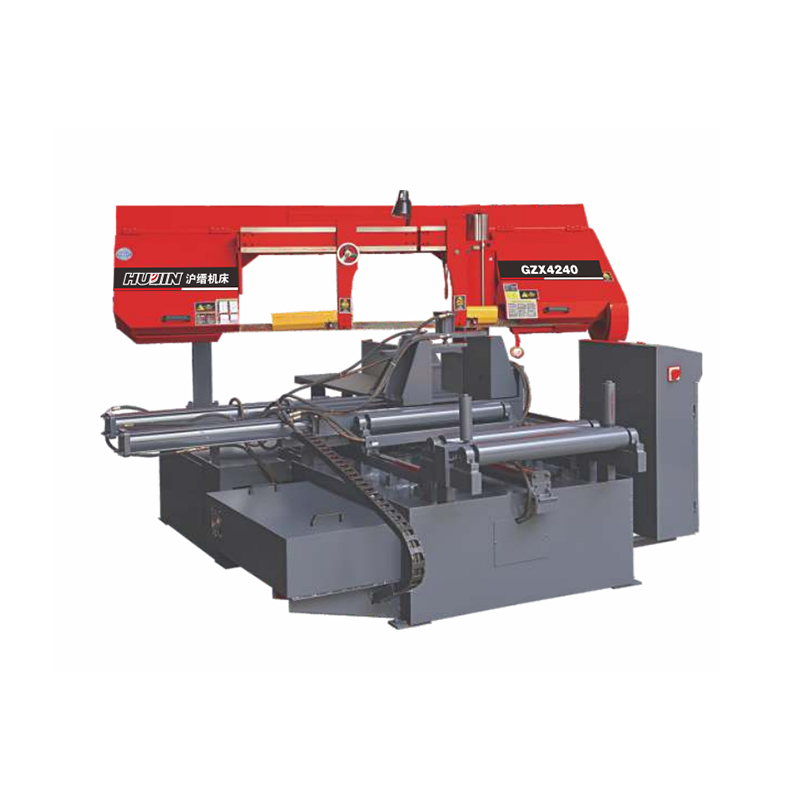
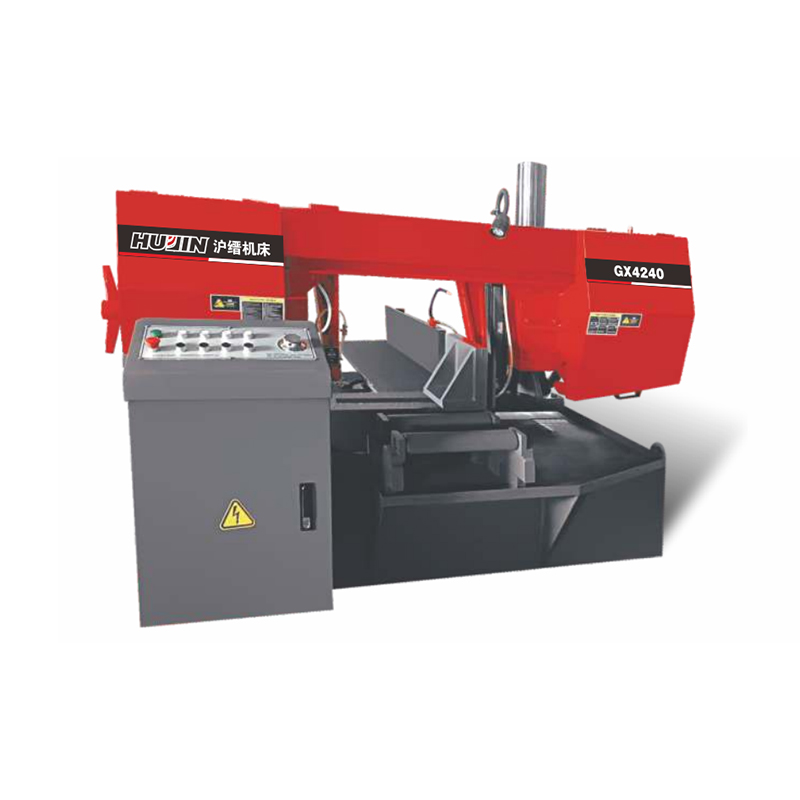
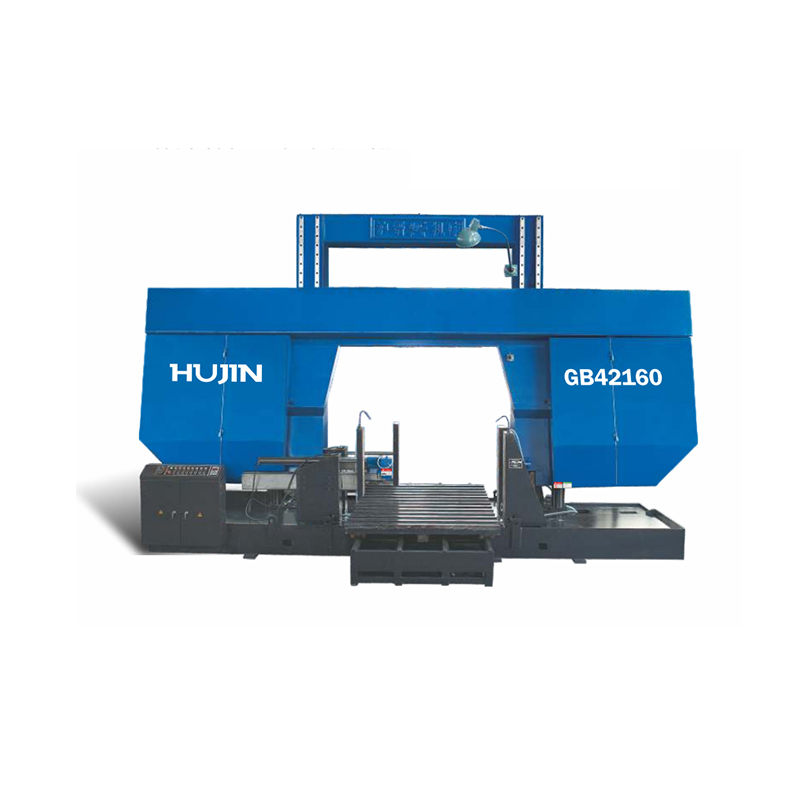
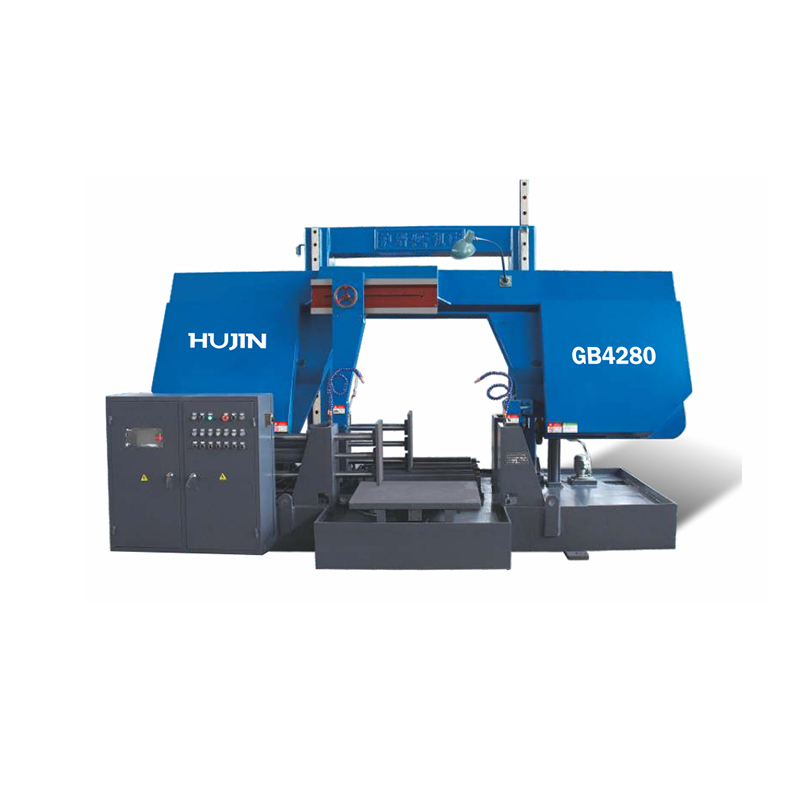
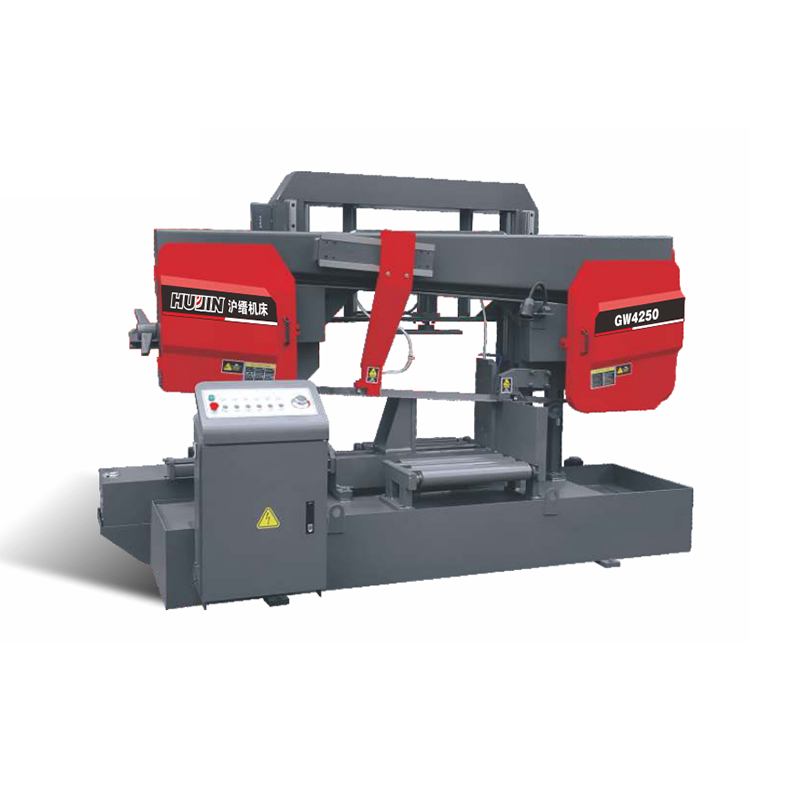
Zhejiang Hujin Machine Tool Co., Ltd. is a professional manufacturer specializing in the production of "Hurein" series hydraulic presses, band saws and milling machines.
Contact Information
phone: +86-18805885558
+86-13395785558
Email: hujin@chinahujin.cn
Add: No. 300, Xingda Road, Jinxiu Industrial Park, Huzhen Town, Jinyun County, Zhejiang Province, China 321404
Mobile Site
© 2023 Zhejiang Hujin Machine Tool Co., Ltd.
Automatic Band Saw Machine Manufacturer
