
Email: hujin@chinahujin.cn
 English
 русский
 عربى
عربى
Author: HUJIN
Date: Jun 05, 2026
Double Column Band Saw: Straight Cuts on Big Stuff
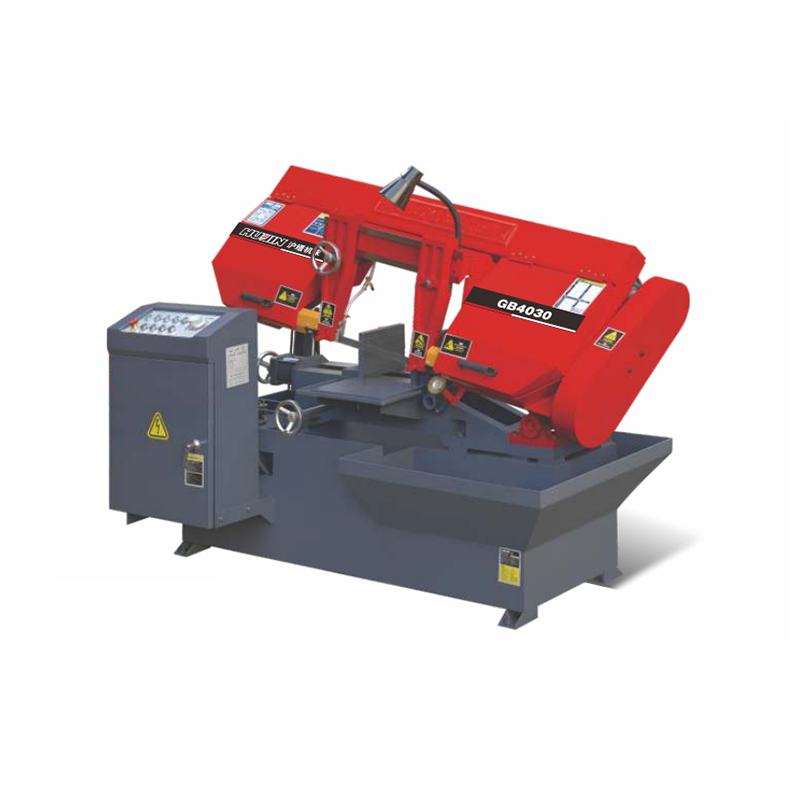
A portable band saw works fine for pipe and conduit. You hold it. You cut. But try cutting a 12-inch steel beam with a portable saw. The blade wanders. The cut is crooked. You grind for twenty minutes to clean it up. A double column band saw solves this. The blade sits between two rigid columns. The cutting head moves straight up and down. No side play. No wandering. Big material. Straight cuts. Every time.
What Makes a Double Column Different from a Standard Band Saw
Two columns keep the cutting head from twisting under load
A standard band saw has one column. The cutting head cantilevers off the side. Push hard on the material, and the head twists. The blade goes off angle. The cut is not square. A double column band saw has a column on each side. The cutting head is trapped between them. It cannot twist. It can only go straight down.
The difference matters on big cuts. A 10-inch solid round bar puts thousands of pounds of force on the blade. The blade wants to push the head sideways. The double column holds it in place.
Blade guides are closer to the material, reducing blade twist
Blade guides support the blade near the cut. On a double column band saw, the guides are mounted on a heavy frame. No flex. The blade stays vertical. The cut stays square.
Here is what a double column band saw does better than a single column:
- Cuts square on large diameters
- Handles bundled material without blade wandering
- Runs faster feed rates because the head is stiffer
- Produces less scrap from crooked cuts
Where Double Column Band Saws Get Used
Steel service centers cutting beams and channels
A steel supplier cuts thousands of pieces per day. Accuracy matters. A double column band saw cuts 12-inch beams square to within 0.5mm. The next cut is the same. The customer gets straight ends. No grinding.
Heavy fabrication shops cutting solid round bars
A 6-inch solid round bar is heavy. 100 kilograms per meter. Lifting it onto the saw table is hard. Cutting it straight is harder. A double column band saw handles the load. The table is wide. The columns are rigid. The blade cuts straight through.
Forging and casting houses cutting risers off parts
Castings come out of the mold with excess material. Runners. Risers. A double column band saw cuts them off. The cut needs to be flat for the next machining operation. A crooked cut means more machining time.
What Makes a Good Double Column Band Saw
Column rigidity determines how square the cut stays
The columns on a double column band saw are steel. Thick steel. Cheap saws use thin wall tube. The column flexes under load. The head tilts. The cut goes crooked. Good saws use solid bar or thick wall tube with internal bracing.
The columns are also ground flat where the head slides. A rough surface creates friction. The head sticks. The feed is jerky. The blade digs in. The cut is rough.
Blade speed and feed need to match the material
Cutting steel is different from cutting aluminum. Different blade speed. Different feed rate. A double column band saw needs variable speed. Turn a dial. The blade slows down or speeds up.
The feed control is even more important. Hydraulic downfeed is standard. Set the descent rate. The saw feeds down at that speed regardless of material resistance. Electric servo feed is better. The saw senses the load and adjusts feed automatically. Faster cutting. Longer blade life.
Here is how feed control affects a double column band saw:
- Gravity feed — cheap, least consistent, blade binds
- Hydraulic feed — smooth, adjustable, good for many shops
- Servo feed — expensive, automatic adjustment, ideal for mixed materials
- Vise clamping force needs to hold the material without crushing it
The vise on a double column band saw holds the material while the blade cuts. Too little force, and the material shifts. The cut is crooked. Too much force on thin wall tube, and the tube crushes. The cut closes up. The blade binds.
Good vises have separate clamping pressure adjustment for different materials. Or hydraulic clamping with pressure control.
Table size and material handling make the saw usable
A double column band saw with a tiny table is useless. The material hangs off the side. You hold it by hand. The cut wanders. The table needs rollers or a conveyor system. The material rests on the table. You push it into the vise. The saw cuts. The material rolls out the back.
Good saws have powered rollers. Press a button. The material moves. No lifting. No strain.
What Goes Wrong with Cheap Double Column Band Saws
The columns are not parallel, so the head binds
Cheap double column band saw products have poorly machined columns. The columns are not parallel. The head slides up and down but binds at certain heights. The feed is jerky. The blade cuts unevenly.
The blade guides wear out quickly
Blade guides are consumable. Cheap guides use soft metal. The blade wears a groove in the guide. The groove pinches the blade. The blade breaks. The saw stops. You buy new guides.
Good guides use carbide inserts. The carbide lasts for years. The blade slides over it. No wear.
The coolant pump fails and the blade overheats
Cutting metal needs coolant. A double column band saw without coolant overheats the blade. The teeth strip. The blade is scrap. Cheap saws use cheap coolant pumps. The pump clogs. The motor burns out. The blade runs dry. The blade dies.
A double column band saw is not cheap. A good one costs $10,000 to $50,000. A cheap one costs $5,000. The cheap one cuts crooked. The blade wears fast. The columns flex. The coolant pump fails. The cheap saw sits in the corner. The operator uses the old saw instead. Spend the money. Get a saw with rigid columns, carbide blade guides, and a real coolant system. Your cuts will be square. Your blades will last. Your shop will be more productive. That is worth the extra cost.

CONTACT
Get in touch
Related Products
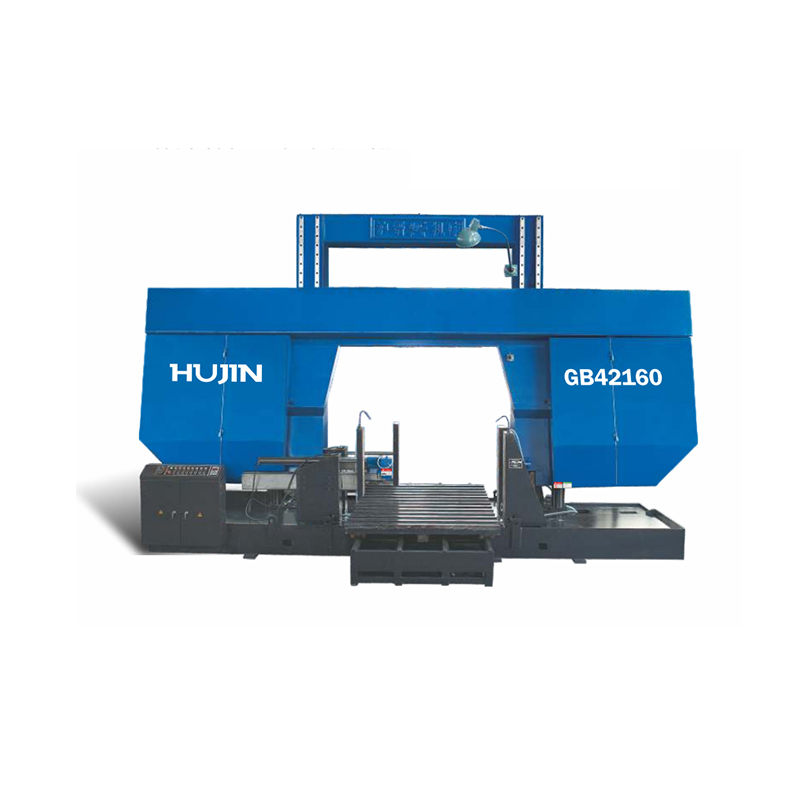
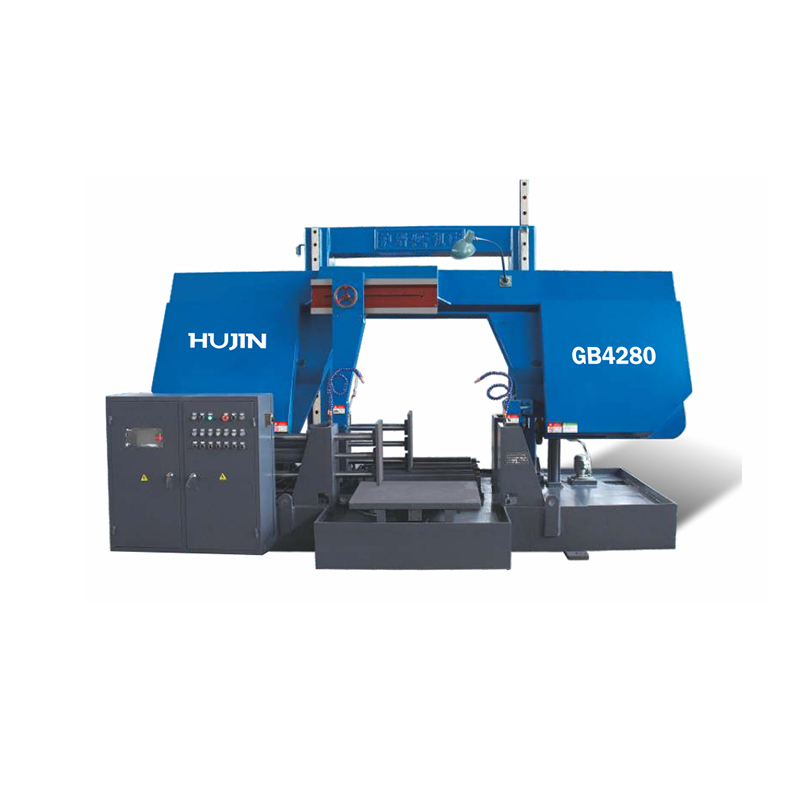
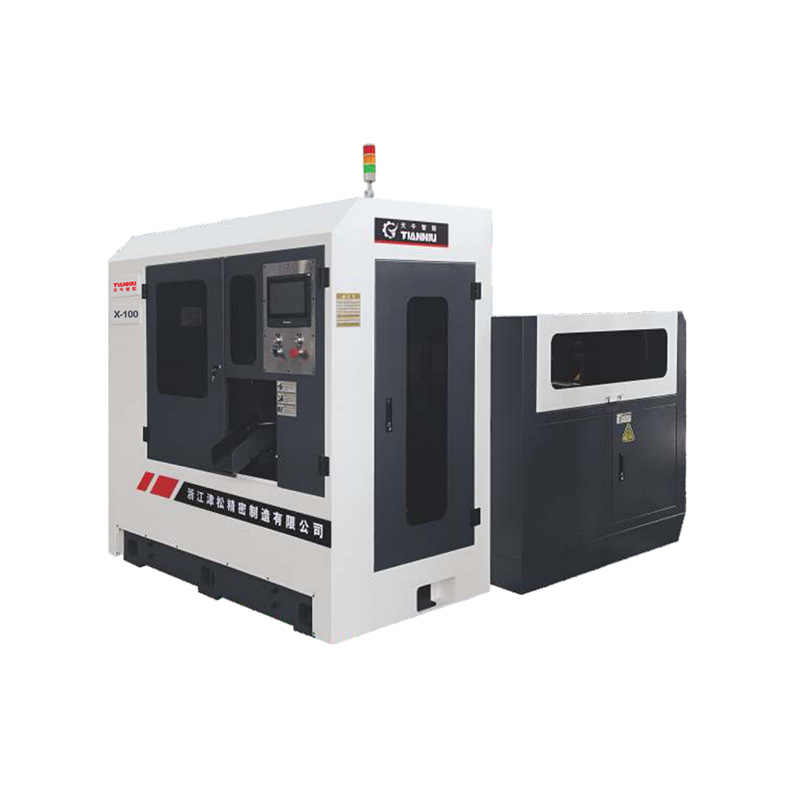
Zhejiang Hujin Machine Tool Co., Ltd. is a professional manufacturer specializing in the production of "Hurein" series hydraulic presses, band saws and milling machines.
Contact Information
phone: +86-18805885558
+86-13395785558
Email: hujin@chinahujin.cn
Add: No. 300, Xingda Road, Jinxiu Industrial Park, Huzhen Town, Jinyun County, Zhejiang Province, China 321404
Mobile Site
© 2023 Zhejiang Hujin Machine Tool Co., Ltd.
Automatic Band Saw Machine Manufacturer
