
Email: hujin@chinahujin.cn
 English
 русский
 عربى
عربى
Author: HUJIN
Date: Jan 23, 2026
Key Differences Between Semi-Automatic and Other Band Saws
Understanding the Semi-Automatic Band Saw
A Semi-Automatic Band Saw combines the efficiency of automated operations with some degree of manual control, offering a balance between productivity and flexibility. Unlike fully manual band saws, which require the operator to guide the material and control the cutting speed entirely by hand, semi-automatic models automate key processes such as blade feeding and cutting pressure. This allows operators to achieve consistent cuts with reduced physical effort while retaining the ability to make adjustments based on material type or cutting requirements. Semi-Automatic Band Saws are particularly popular in workshops that process a moderate volume of materials requiring precision without the high investment of full automation.
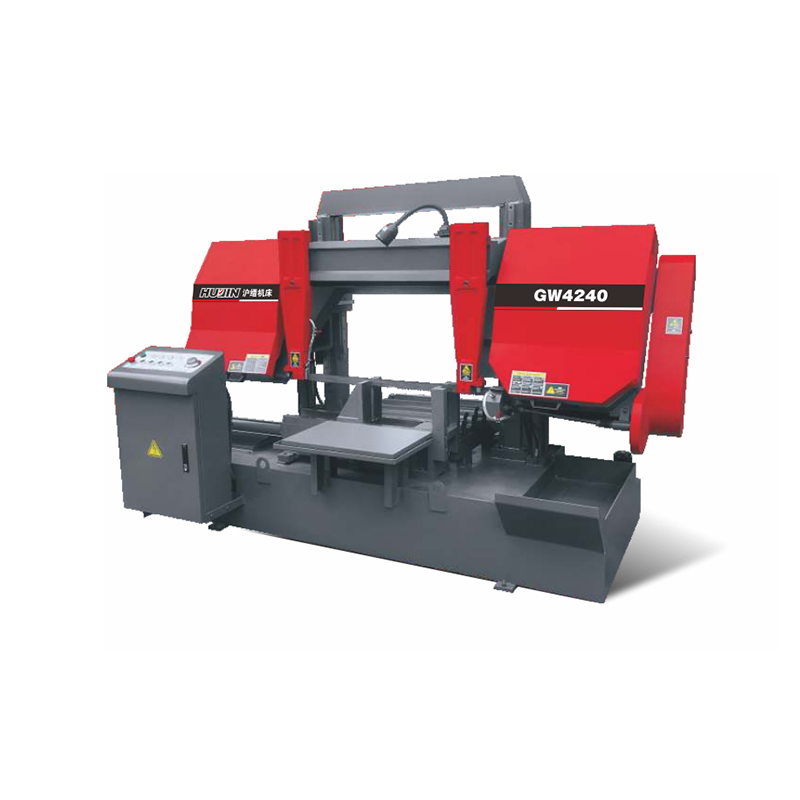
Manual Band Saws: Control and Limitations
Manual band saws are characterized by the operator’s direct involvement in all aspects of the cutting process. The user must feed the material at a steady pace, control blade alignment, and adjust pressure as needed. While manual saws offer good flexibility for small jobs or irregularly shaped materials, they have significant limitations. Cutting speed is entirely dependent on the operator’s skill, and maintaining uniform accuracy over long or repetitive cuts can be challenging. Additionally, prolonged operation requires considerable physical effort, which can cause fatigue and inconsistent results. Manual band saws are generally less expensive than semi-automatic or fully automatic models, making them suitable for low-volume or budget-conscious operations.
Fully Automatic Band Saws: Efficiency at Scale
Fully automatic band saws take automation to the next level by controlling almost all aspects of the cutting cycle without manual intervention. These machines automatically feed, cut, and position materials according to pre-programmed specifications, often integrating with CNC systems for precision and repeatability. Fully automatic saws improve productivity and consistency, especially in industrial environments with high-volume demands. However, they come with higher initial costs and require more advanced maintenance skills. Additionally, they offer less immediate flexibility for handling unusual material sizes or shapes, as changes to cutting programs may be necessary.
Productivity and Efficiency Comparisons
When comparing Semi-Automatic Band Saws with manual and fully automatic models, productivity and efficiency stand out as key differentiators. Semi-automatic models reduce operator workload while providing reliable, repeatable cuts, offering higher throughput than manual saws without the complexity and cost of full automation. Fully automatic saws surpass semi-automatic models in large-scale, repetitive production environments but may be overkill for smaller workshops or mixed-material applications. Operators must weigh the volume of work, material variety, and precision requirements when selecting between these types of saws.
Flexibility and Control Differences
Flexibility is another important consideration. Manual saws provide control over the cutting process, allowing skilled operators to make adjustments on the fly. Semi-Automatic Band Saws offer a compromise, providing automated feeding and cut execution while still allowing the operator to intervene as needed. Fully automatic machines, while highly efficient, limit hands-on adjustments during operation, which can be a disadvantage when cutting complex or irregular materials. Therefore, semi-automatic models often strike the balance for shops requiring both precision and adaptability.
Choosing the Right Band Saw Type
Selecting between a Semi-Automatic Band Saw, a manual, or a fully automatic band saw depends on production volume, material complexity, desired precision, and budget. Semi-automatic models provide an ideal middle ground, combining efficiency, repeatability, and operator control. Manual saws suit small-scale, flexible operations, while fully automatic saws excel in high-volume, repetitive production scenarios. Understanding the differences ensures operators can match the right machine to their specific operational needs, improving both productivity and cutting quality.

CONTACT
Get in touch
Related Products
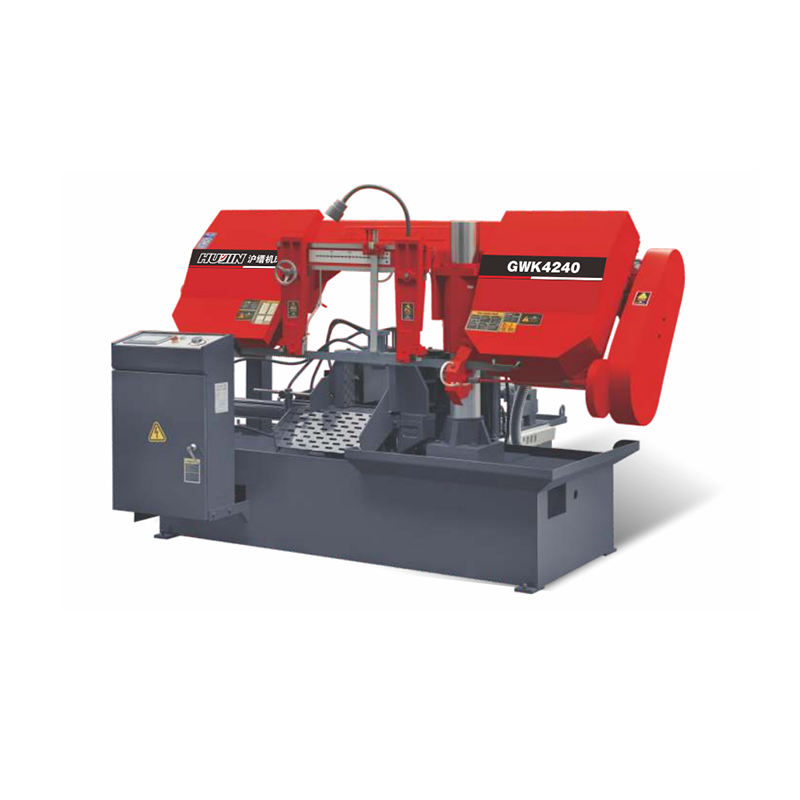
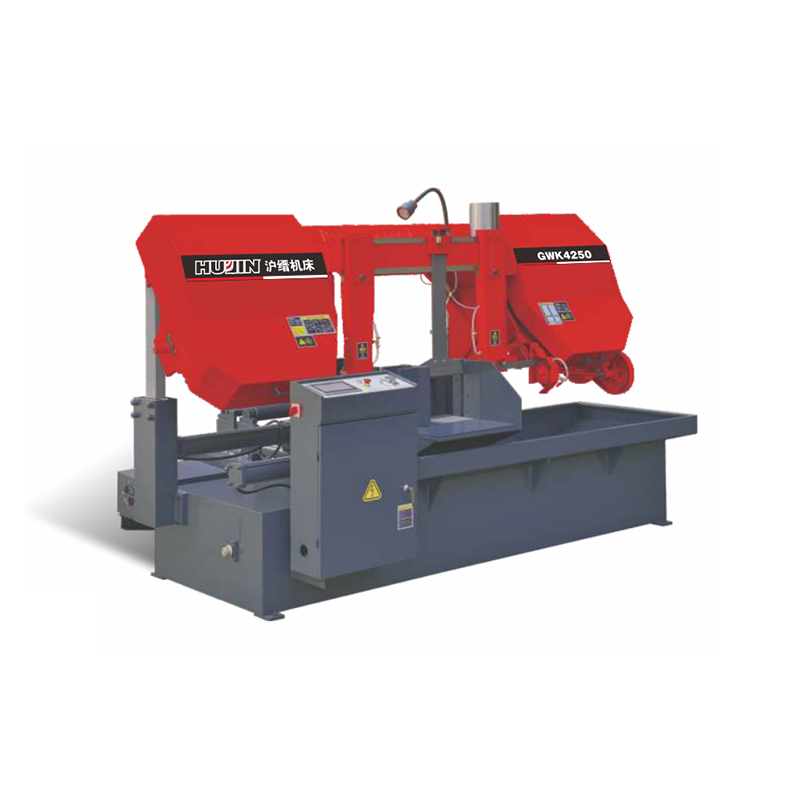
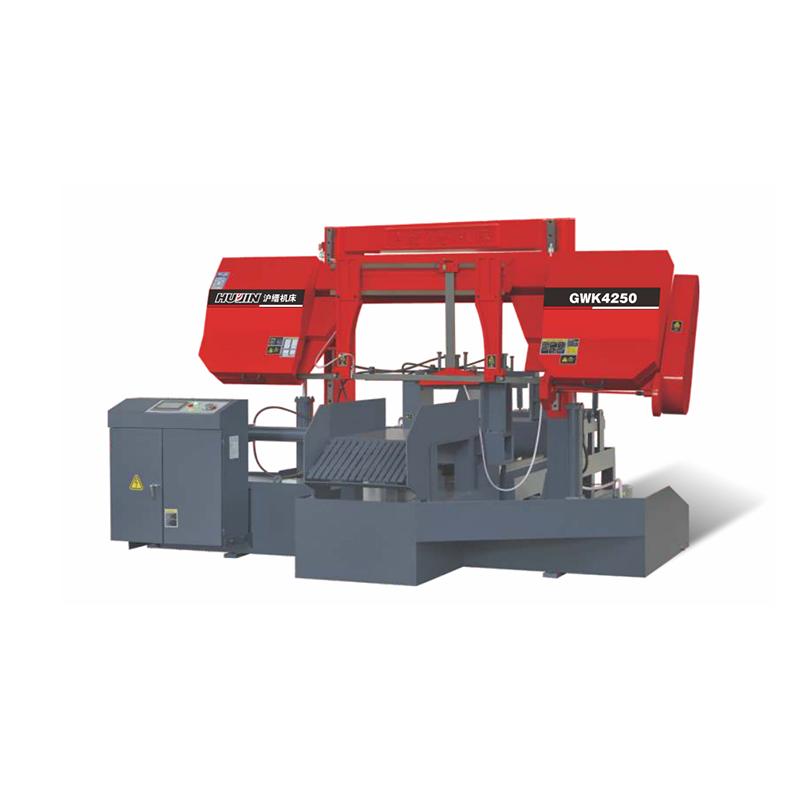
Zhejiang Hujin Machine Tool Co., Ltd. is a professional manufacturer specializing in the production of "Hurein" series hydraulic presses, band saws and milling machines.
Contact Information
phone: +86-18805885558
+86-13395785558
Email: hujin@chinahujin.cn
Add: No. 300, Xingda Road, Jinxiu Industrial Park, Huzhen Town, Jinyun County, Zhejiang Province, China 321404
Mobile Site
© 2023 Zhejiang Hujin Machine Tool Co., Ltd.
Automatic Band Saw Machine Manufacturer
